Water Damage Restoration in Bow Mar, CO
Bow Mar is a town of about 850 people on 0.8 square miles straddling the Arapahoe and Jefferson county line southwest of Denver, named for Bowles Lake and Marston Lake, the two reservoirs that bracket it. Lloyd and Eleanor King built the first house in 1947, the rest went up through the late 1940s and 1950s, and the town incorporated in August 1958 to keep it the way it was: one-story houses on acre lots, many in a Frank Lloyd Wright prairie style, with a private lake and beach for residents. The rule limiting houses to one story means a Bow Mar house spreads out, and its basement spreads out with it.
The water pattern is a 1950s ranch next to two lakes. The ground water table sits high on the lake side of town, the original copper is seventy years old, and the long, low roofs with wide overhangs collect hail and hold snow. Many houses have been renovated with radiant floors and finished lower levels that the 1952 builder never planned for.
This site puts Bow Mar homeowners through by phone to an independent local water damage provider. The provider takes readings in the basement before deciding anything.
Bow Mar water damage in a prairie-style ranch
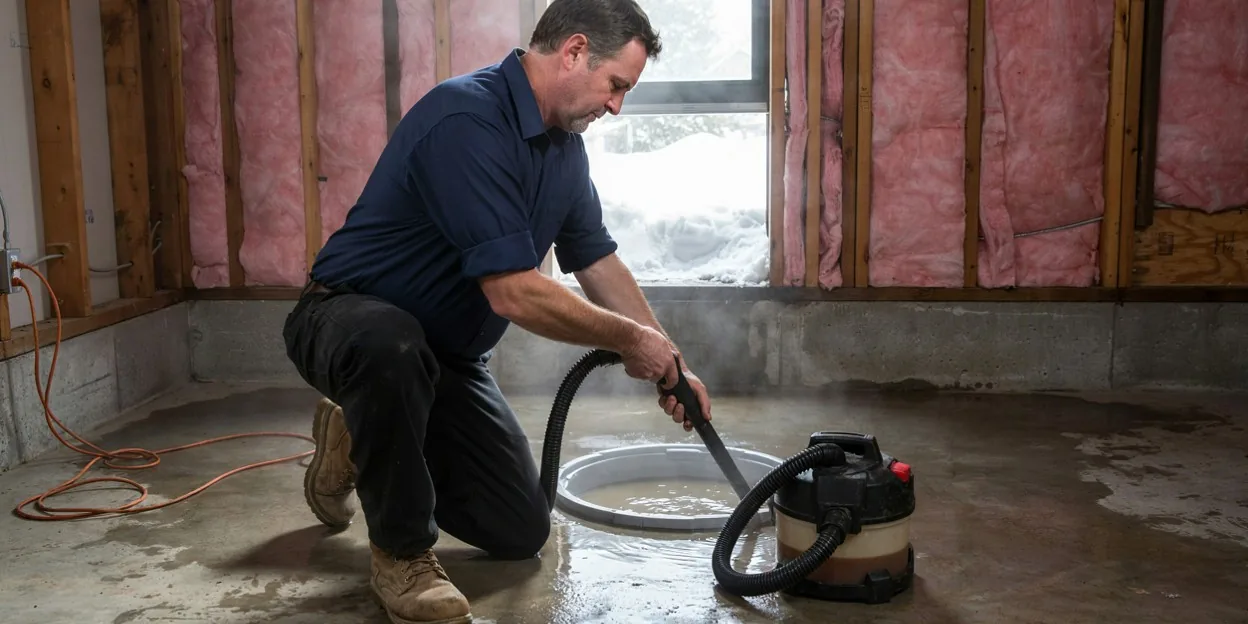
A lower level on the lake side with damp carpet after a wet spring is a basement flooding cleanup. A 1950s copper line that let go in a wall and ran under the oak is water extraction first and a floor-drying job second. Once the wet material is out, structural drying runs equipment against daily readings until the slab and the walls read dry.
A town of one story, two counties, and its own water district
The Town of Bow Mar handles its own building permits through town hall, and because the town sits in two counties, the county desk for anything the town does not handle depends on which side of the line the house is on. Bow Mar buys its water from Denver Water through a master-meter arrangement and runs its own distribution, so a leak on the street side of the meter is a town call, not a Denver Water call.
Call (720) 807-5901 and describe what you see. We put you through to an independent local water damage provider serving Bow Mar.
Services Available in Bow Mar
Basement Flooding Cleanup
Groundwater, a failed pit pump, or a broken line in a finished Cherry Hills basement pumped out, then carpet pad, drywall, and framing metered.
Water Extraction
Standing water pulled off hardwood, tile, and basement concrete on any level of the house, with the first moisture readings taken the same visit.
Structural Drying
Air movers and dehumidifiers run against daily readings until plaster, studs, subfloor, and slab reach their dry target in a mile-high house.
Frozen Pipe Cleanup
Cleanup after a supply line, hose bib, or sprinkler backflow froze in a January cold snap and split, then drying of everything the thaw soaked.
Burst Pipe Water Damage
A failed supply line, boiler fitting, or radiant loop on an upper floor, and the ceilings, walls, and floors below it, dried from the top down.
Leak Detection
A high Denver Water bill, a warm patch on a slab, or a musty wall traced to its source before anyone opens plaster or cuts tile.
Water Heater Leak Cleanup
A tank that let go in a basement mechanical room or a garage closet, and the flooring, drywall, and storage around it dried out.
Roof Leak Water Damage
Wet attic insulation, ceilings, and walls dried after a summer hailstorm or a wind-lifted shingle let water into the house.