Frozen Pipe Cleanup in Cherry Hills Village, CO
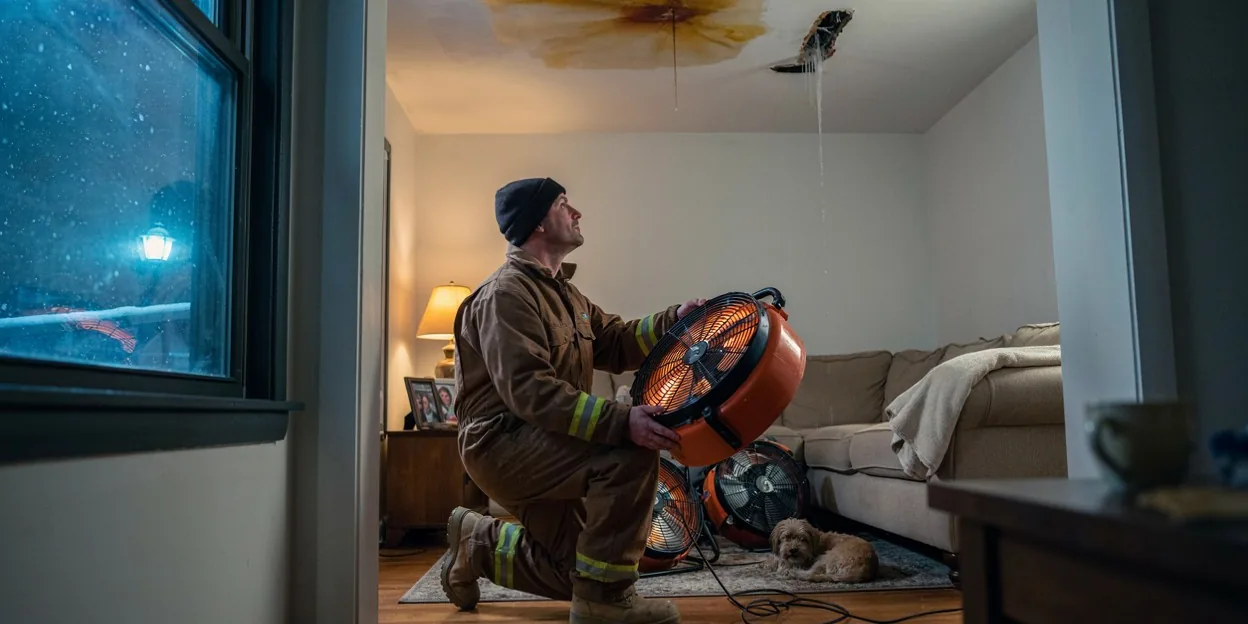
The forecast said minus 20 and the house held. Two days later, with the sun out and the snow melting off the roof, water started coming through the ceiling of the mudroom from the hose bib line in the wall above the garage. The ice that plugged the split had let go with the thaw. This site puts you through by phone to an independent local provider who cleans up after frozen pipes in Cherry Hills Village and across Arapahoe County.
Counting back to the night it froze
Ice in a split pipe is its own cork; nothing runs until it melts, and in Denver the thaw usually comes fast, a day or two after the cold breaks, when the afternoon climbs back into the forties. So the crew's first questions are when the water was found and when the temperature came up, because the gap between them says how long the wall has been wet. Then they confirm the main is closed, pull the standing water, and meter the wall on both sides of the split, the floor below it, and the ceiling under that if the split was upstairs.
Frozen lines start in the same places in every Cherry Hills house: the hose bib that was never shut inside, the supply to a garage sink, the line to a pool house or a guest casita, the sprinkler backflow standing above ground on the side yard, and the pipe in the wall behind the kitchen sink on the north side of a 1960s ranch.
Shut the main, warm the house, and leave the torch in the drawer
Close the main on the house side of the meter and keep it closed until a plumber has found every split, because a second section can let go as the house warms. Turn the heat up. Open the cabinets under sinks on exterior walls and the access panel behind the tub so warm air reaches the pipes. A torch or a heat gun on a pipe inside a wall is how a frozen-pipe call becomes a fire call; leave them in the drawer. Carry what you can out of the wet room, take photos of the wall and the floor, and pick up the phone. The plumber owns the pipe; the cleanup crew owns the house around it.
The framing stays, the insulation goes, the floor depends on the material
If the crew opens the wall within a few days, the studs and the plate usually dry in place. The insulation in that wall almost always comes out, because it held the water against the framing the whole time the pipe ran, and the drywall in front of it comes out with it. A garage slab needs nothing but air once the standing water is squeegeed off. Hardwood in a mudroom or kitchen that took water from above is metered board by board, and the answer depends on how long it ran. Once the wet material is out, structural drying runs until the wall reads dry.
A split upstairs that ran down through a finished basement turns one job into two, and the lower level gets the full treatment of a basement flooding cleanup. A split that turned out to be a boiler or radiant line rather than a supply is handled as burst pipe water damage, because the water in those loops is treated differently.
Where Cherry Hills Village houses freeze
Footings along the Front Range go about three feet down to get below the frost, but the pipes that freeze are not near the footing. They are in the garage wall, the mudroom ceiling, the kitchen wall on the shady side of the house, and in the sprinkler backflow preventer that stands eighteen inches above the lawn all winter. On December 22, 2022, the temperature at Denver International Airport fell 37 degrees in one hour and bottomed out at minus 24, one degree off the all-time December record. FOX31 Denver counted 82 water-related calls to South Metro Fire Rescue during one arctic outbreak, and a plumber told the station that every call he ran for three days was a burst pipe.
Houses that sit empty over the holidays are the classic case here. A thermostat set to 58 keeps the main floor fine and the garage wall frozen. If you winter elsewhere, shut the main, drain what you can, have the sprinklers blown out in October, and have someone walk the house every few days when the forecast drops below zero.
A burst pipe is often treated as a sudden loss under a homeowner policy, but some policies handle a frozen pipe in an unheated or unoccupied house differently and expect the heat to have been left on. This site cannot say what yours does. Have the crew record the discovery date, the first readings, and the photos.
What to say about a line that froze
Name the wall or room the water showed up in, say whether the main is closed, and say whether a plumber is already coming. Mention whether the house was empty and for how long, and whether the water reached the basement. Call (720) 807-5901.